The cryptocurrency space has created tremendous opportunities for financial freedom and wealth building. Unfortunately, where there's money, there are also people trying to steal it. Since Bitcoin's inception, scammers have developed increasingly sophisticated methods to separate honest investors from their hard-earned crypto assets.
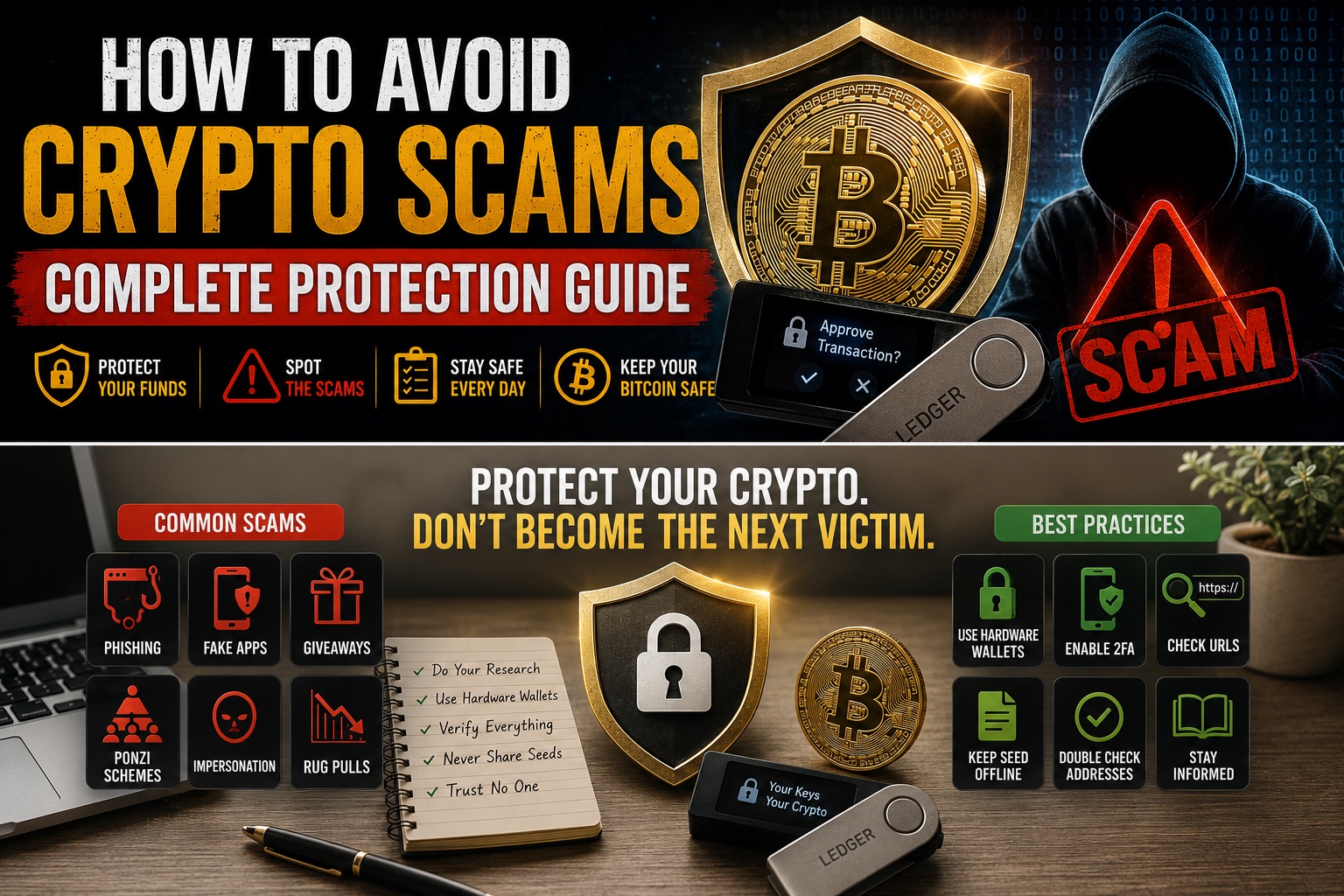
Here's the uncomfortable truth: billions of dollars are lost to cryptocurrency scams every single year. The decentralized nature of blockchain technology—the very feature that makes it revolutionary—also means that transactions are irreversible. Once your crypto is gone, it's usually gone forever. There's no bank to call, no chargeback to request, and often no authority that can help you recover your funds.
But here's the good news: the vast majority of crypto scams follow predictable patterns. Once you understand how scammers operate and what red flags to watch for, you can protect yourself effectively. This guide will walk you through everything you need to know to keep your cryptocurrency safe from fraudsters, whether you're a complete beginner or a seasoned investor looking to strengthen your security practices.
Understanding the Most Common Types of Crypto Scams
Before you can protect yourself, you need to know what you're protecting yourself against. Crypto scams generally fall into several distinct categories, each with its own tactics and warning signs.
Phishing Attacks
Phishing remains the most prevalent form of crypto theft. Scammers create fake websites, emails, or messages that impersonate legitimate cryptocurrency exchanges, wallet providers, or other services. These fraudulent communications often look remarkably authentic, complete with official logos, professional formatting, and convincing domain names that differ from the real thing by just one or two characters.
For example, a scammer might send you an email appearing to be from your exchange, warning that your account has been compromised and urging you to click a link to verify your identity. That link leads to a fake login page designed to capture your credentials. Once they have your username and password, they can drain your account within minutes.
Investment and Ponzi Schemes
These scams promise extraordinary returns with little or no risk. They might present themselves as trading bots, investment funds, or mining operations that guarantee profits of 1% per day or more. In reality, they use new investors' money to pay earlier investors, creating the illusion of legitimate returns until the scheme inevitably collapses.
The mathematics of these schemes make failure inevitable. Any investment promising guaranteed daily returns will eventually run out of new money to pay existing investors. When that happens, the operators disappear with whatever funds remain.
Fake Giveaways and Impersonation Scams
You've probably seen them: social media posts or YouTube live streams claiming that a famous person or company is giving away cryptocurrency. "Send 0.1 BTC to this address and receive 0.2 BTC back!" These scams exploit people's trust in public figures and their desire for easy money.
No legitimate person or organization will ever ask you to send cryptocurrency in order to receive more back. This is always a scam, without exception. The impersonators often use verified-looking accounts, hijacked channels, or sophisticated deepfake videos to appear legitimate.
Romance and Social Engineering Scams
These scams involve building relationships over time before making financial requests. Scammers create fake profiles on dating apps or social media, invest weeks or months in building trust, and eventually introduce cryptocurrency "investment opportunities" or request financial help that must be sent in crypto.
The emotional manipulation makes these scams particularly devastating. Victims often continue sending money even after friends or family express concerns, because they've developed genuine feelings for their scammer.
Rug Pulls and Fake Projects
In this scenario, developers create a new cryptocurrency token, generate excitement through marketing and social media hype, wait for investors to buy in, and then suddenly disappear with the pooled funds. The token becomes worthless, and investors are left with nothing.
These scams often target newer investors who are attracted to the potential of finding "the next big thing" in crypto. The projects typically have anonymous teams, unrealistic promises, and aggressive marketing that emphasizes potential gains rather than actual utility.
Red Flags That Signal a Crypto Scam
While scammers constantly evolve their tactics, certain warning signs remain consistent across nearly all cryptocurrency fraud. Training yourself to recognize these red flags is your first line of defense.
Guaranteed Returns: Legitimate investments never come with guarantees. Anyone promising fixed daily, weekly, or monthly returns is either lying or running an unsustainable scheme. Real cryptocurrency investments carry risk, and anyone who tells you otherwise is trying to take advantage of you.
Pressure to Act Quickly: Scammers create artificial urgency because they don't want you to have time to think critically or research their claims. Phrases like "limited time offer," "act now before it's too late," or "this opportunity won't last" are manipulation tactics designed to bypass your rational judgment.
Requests for Private Keys or Seed Phrases: Your private keys and seed phrases are the master passwords to your cryptocurrency. No legitimate service, support representative, or organization will ever ask for this information. Anyone who does is attempting to steal your funds.
Unsolicited Contact: Be extremely wary of anyone who contacts you out of the blue with investment opportunities, technical support, or romantic interest that eventually leads to financial discussions. Legitimate opportunities don't typically find you through random messages.
Anonymous or Unverifiable Teams: While privacy has legitimate uses in crypto, investment opportunities led by completely anonymous teams present significant risk. If you can't verify who is behind a project and their track record, you're essentially trusting strangers with your money.
Too Good to Be True: This timeless advice applies perfectly to cryptocurrency. If an opportunity sounds too good to be true, it almost certainly is. Extraordinary claims require extraordinary evidence, and most scams rely on promises that simply cannot be delivered.
Essential Security Practices for Protecting Your Crypto
Beyond recognizing scams, implementing robust security practices creates multiple layers of protection for your cryptocurrency holdings. Think of security as a system rather than a single solution.
Secure Your Private Keys Properly
The most important security decision you'll make is how you store your private keys. For any significant amount of cryptocurrency, a hardware wallet provides the best combination of security and usability. Devices like the Ledger Nano X or Ledger Nano S Plus keep your private keys offline, protected from hackers even if your computer is compromised.
When you set up a hardware wallet, you'll receive a seed phrase—typically 24 words that can restore your entire wallet. Write this phrase down on paper (never store it digitally), verify it's correct, and store it in a secure location like a fireproof safe. Consider keeping a backup in a separate physical location in case of disaster.
Use Strong, Unique Passwords
Every cryptocurrency-related account should have a unique, complex password. Use a password manager to generate and store these passwords securely. Your exchange accounts, email accounts, and any other services connected to your crypto should all have different passwords at least 16 characters long.
Enable Two-Factor Authentication Everywhere
Two-factor authentication (2FA) adds a crucial second layer of security. Even if someone obtains your password, they can't access your account without the second factor. Use authenticator apps like Google Authenticator or Authy rather than SMS-based 2FA, as phone numbers can be compromised through SIM swapping attacks.
Verify Everything Independently
Never click links in emails or messages, even if they appear legitimate. Instead, manually type the website address into your browser or use bookmarks you've previously saved. When making significant transactions, verify wallet addresses character by character—some malware can modify copied addresses to redirect funds to scammer wallets.
Keep Software Updated
Regularly update your operating system, browsers, antivirus software, and any cryptocurrency applications. Security patches often address vulnerabilities that hackers actively exploit. Outdated software is a common entry point for malware designed to steal cryptocurrency.
How to Verify Legitimate Cryptocurrency Services
Not every new platform or opportunity is a scam, but you should verify legitimacy before trusting any service with your money or information. Here's a systematic approach to due diligence.
Step 1: Research the Company Background
Look for verifiable information about the company's registration, physical address, and leadership team. Legitimate exchanges like Binance provide transparent information about their operations, regulatory compliance, and the real people running the company. Be suspicious of services that hide this basic information.
Step 2: Check Regulatory Status
Reputable cryptocurrency services typically hold licenses or registrations in the jurisdictions where they operate. While regulation varies globally, complete absence of any regulatory oversight is a warning sign. Check with relevant financial authorities to verify claimed licenses.
Step 3: Search for Reviews and Community Feedback
Look for reviews from multiple independent sources. Be aware that fake reviews exist, so look for detailed, specific feedback rather than generic praise. Check cryptocurrency forums, Reddit communities, and trusted review sites. A complete absence of discussion about a service is itself a red flag.
Step 4: Start Small
Even after thorough research, test any new service with a small amount first. Verify that deposits, withdrawals, and customer support all function as expected before committing larger sums.
Step 5: Verify Contact Methods
Legitimate services provide multiple ways to contact them and actually respond to inquiries. Test their customer support before you need it urgently. Scam operations typically have non-functional contact forms, unreachable phone numbers, or support that only responds when you're trying to deposit money.
What to Do If You Suspect a Scam
If you encounter what you believe to be a scam, or worse, if you've already fallen victim to one, taking prompt action can sometimes limit damage and always helps protect others.
Immediate Steps if You've Been Compromised
If you've shared login credentials with a suspected scammer, immediately change your passwords on all related accounts. Enable or update two-factor authentication. If you use the same password elsewhere (which you shouldn't), change those passwords too.
If you've shared your seed phrase or private keys, any funds in those wallets should be considered compromised. Transfer remaining assets to a new wallet with freshly generated keys as quickly as possible.
If you've sent cryptocurrency to a scammer, unfortunately, the transaction cannot be reversed. Document everything—screenshots of conversations, transaction IDs, wallet addresses, website URLs—as this information may be useful for reporting.
Reporting the Scam
Report cryptocurrency scams to relevant authorities in your jurisdiction. In the United States, this includes the FTC, FBI's IC3, and the SEC if securities fraud is involved. Many countries have similar agencies. While recovery is rare, reports help authorities track scam operations and potentially prevent future victims.
Report the scam to the platforms involved. If you encountered the scam on social media, report the account. If a fake website is impersonating a legitimate service, notify that service so they can take action.
Protecting Others
Share your experience with cryptocurrency communities to warn others. Many scams succeed because victims are too embarrassed to speak up. By sharing what happened, you help others recognize similar tactics.
Building Long-Term Security Habits
Cryptocurrency security isn't a one-time task—it's an ongoing practice. Building sustainable habits protects you not just today, but throughout your entire crypto journey.
Make security reviews a regular practice. Periodically audit your passwords, check which devices and applications have access to your accounts, and review your authentication methods. Remove access from devices you no longer use and close accounts for services you no longer need.
Stay informed about new scam techniques. Follow reputable cryptocurrency news sources and security-focused accounts. Scammers constantly develop new tactics, and awareness is your best defense against novel threats.
Practice healthy skepticism. This doesn't mean becoming paranoid, but rather developing the habit of verifying claims before acting on them. When someone presents an opportunity or requests action, take time to independently confirm the information.
Consider your overall cryptocurrency strategy. Keeping all your holdings on a single exchange creates a single point of failure. Diversifying across secure storage methods—hardware wallets for long-term holdings, reputable exchanges like Binance for active trading—reduces risk from any single compromise.
Educate those around you. Friends and family members who are new to cryptocurrency are often targeted by scammers. By sharing your knowledge, you create a more informed community that's harder to exploit.
Frequently Asked Questions
Can I recover cryptocurrency that was stolen in a scam?
Unfortunately, cryptocurrency transactions are irreversible by design, and recovery is extremely rare. Some services claim to offer crypto recovery, but many of these are themselves scams that target people who have already been victimized once. Your best protection is prevention. If you've lost funds, report the incident to authorities, but be realistic about recovery prospects and be extremely wary of anyone claiming they can get your crypto back for a fee.
Is it safe to keep my cryptocurrency on an exchange?
Reputable exchanges implement strong security measures, but keeping large amounts on any exchange carries risk. Exchanges can be hacked, face regulatory issues, or experience other problems that affect access to funds. The general principle "not your keys, not your coins" reflects this reality. For significant holdings, transfer to a hardware wallet like a Ledger device where you control the private keys. Keep on exchanges only what you need for active trading.
How can I tell if a cryptocurrency project is legitimate?
Evaluate multiple factors: Is the team identifiable and do they have relevant experience? Does the project have a clear use case and realistic roadmap? Is the code open source and has it been audited? Does the tokenomics make sense, or are insiders holding a suspicious proportion? Is the community organic or artificially inflated? Is the marketing focused on utility or just price speculation? No single factor is definitive, but considering all of them together helps distinguish legitimate projects from potential scams.
What should I do if someone claiming to be from support asks for my information?
Never provide sensitive information to anyone who contacts you first. Legitimate support teams will not ask for your password, seed phrase, private keys, or two-factor codes. If you receive such a request, it is a scam—regardless of how legitimate the communication appears. If you're concerned about a real issue, contact support yourself through official channels listed on the company's verified website.
Are there any guaranteed safe investments in cryptocurrency?
No. There are no guaranteed safe investments in any asset class, and anyone who tells you otherwise is either mistaken or lying. Cryptocurrency is particularly volatile, and even established assets like Bitcoin experience significant price swings. Approach any investment with clear understanding of the risks, never invest more than you can afford to lose, and be extremely suspicious of anyone promising guaranteed returns.
Conclusion
Protecting yourself from cryptocurrency scams ultimately comes down to a combination of knowledge, vigilance, and proper security practices. The scammers are sophisticated and constantly evolving, but so is our understanding of how to defeat them.
Remember the fundamentals: if it sounds too good to be true, it is. Never share your private keys or seed phrases with anyone. Verify everything independently before taking action. Use hardware wallets for significant holdings and enable two-factor authentication on all accounts.
The cryptocurrency space offers genuine opportunities for financial growth and participation in revolutionary technology. By protecting yourself from scams, you can focus on those opportunities without becoming another victim statistic. Stay skeptical, stay informed, and stay safe.
Your crypto security is ultimately your responsibility. Take it seriously, implement the practices outlined in this guide, and you'll be well-protected against the vast majority of threats in the cryptocurrency landscape.