Imagine a global network of computers racing to solve complex mathematical puzzles, and the winner gets rewarded with brand new Bitcoin. That's Bitcoin mining in its simplest form—but there's so much more happening beneath the surface that makes this process one of the most fascinating innovations in modern technology.
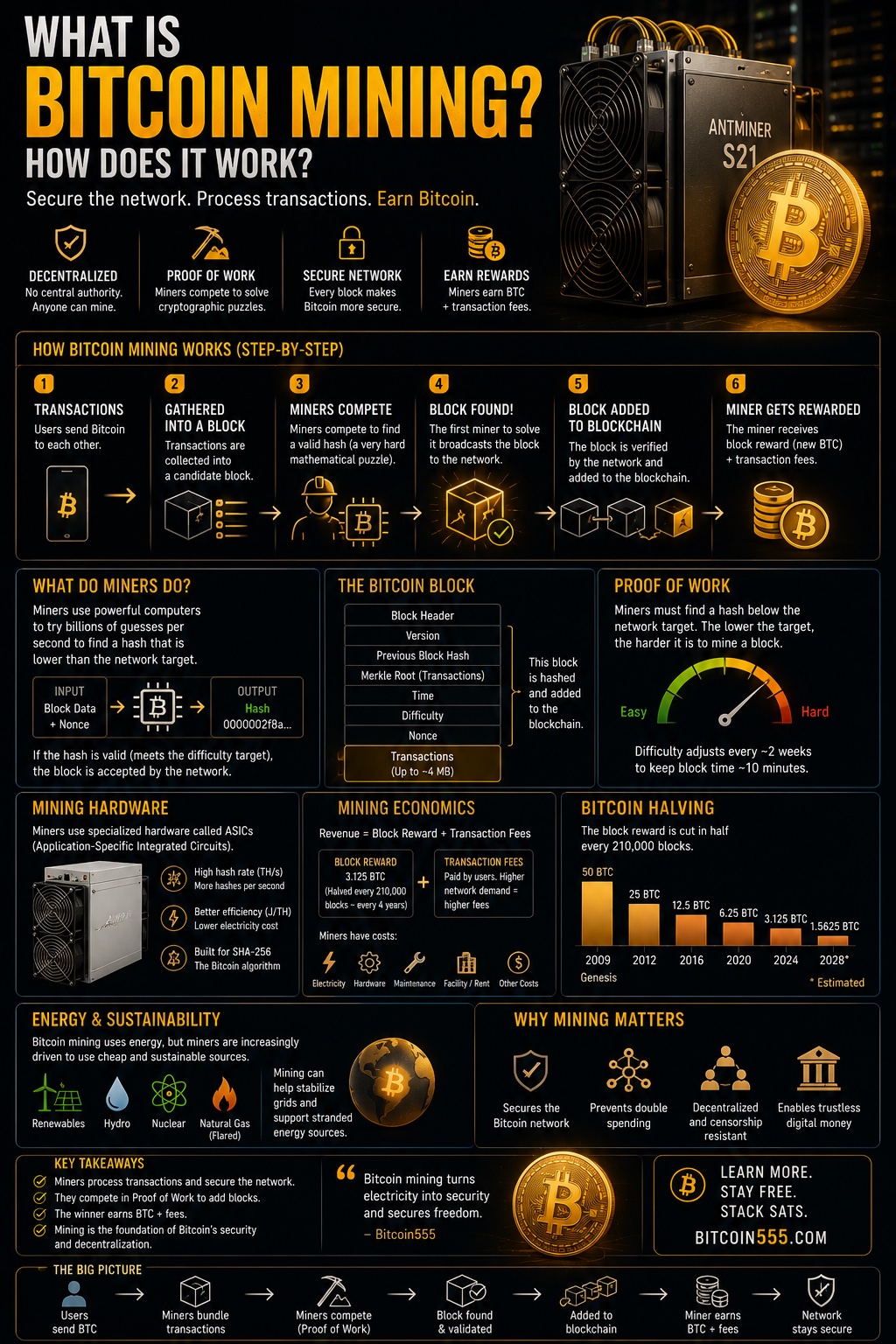
Bitcoin mining isn't just about creating new coins. It's the backbone of the entire Bitcoin network, providing security, validating transactions, and maintaining a trustless system that operates without banks or governments. Whether you're curious about how your Bitcoin transactions actually get confirmed, considering mining as a potential venture, or simply want to understand this revolutionary technology better, this guide will walk you through everything you need to know.
By the end of this article, you'll understand not just what miners do, but why their work is essential to Bitcoin's existence and how the entire system maintains its integrity without any central authority.
Understanding the Fundamentals of Bitcoin Mining
At its core, Bitcoin mining serves two critical purposes: it creates new bitcoins and it processes transactions on the network. Think of miners as both the mint and the accountants of the Bitcoin ecosystem—they're simultaneously creating new currency and keeping meticulous records of every transaction.
When someone sends Bitcoin to another person, that transaction doesn't instantly appear on the blockchain. Instead, it enters a waiting area called the mempool, where it sits alongside thousands of other pending transactions. Miners collect these transactions, bundle them into blocks, and compete to add their block to the blockchain.
Here's where things get interesting. Bitcoin uses a consensus mechanism called Proof of Work (PoW). This system requires miners to prove they've expended computational effort before they can add a block to the chain. The proof comes in the form of solving a cryptographic puzzle—specifically, finding a number called a "nonce" that, when combined with the block's data and run through a hashing algorithm, produces a result that meets certain criteria.
The difficulty of this puzzle adjusts automatically every 2,016 blocks (approximately two weeks) to ensure that, on average, a new block is added every 10 minutes regardless of how much computing power is dedicated to mining. If blocks are being found too quickly, the difficulty increases. If they're found too slowly, it decreases.
This elegant self-regulating system means that no matter how many miners join or leave the network, Bitcoin maintains its predictable issuance schedule and block time.
The Step-by-Step Bitcoin Mining Process
Let's break down exactly what happens when a miner attempts to create a new block:
- Transaction Collection: The miner's software gathers unconfirmed transactions from the mempool. Miners typically prioritize transactions with higher fees, as these fees become part of their reward. A typical block can contain between 1,000 and 3,000 transactions.
- Block Construction: The miner assembles these transactions into a candidate block. This block includes a header containing the previous block's hash (linking it to the chain), a timestamp, the difficulty target, and space for the nonce.
- Hashing Competition: The miner's hardware begins rapidly calculating hashes. Each attempt involves incrementing the nonce and running the block header through the SHA-256 algorithm twice. The goal is to find a hash that's below the current difficulty target—essentially, a hash that starts with a certain number of zeros.
- Proof Discovery: When a miner finds a valid hash, they've solved the puzzle. This happens through pure trial and error—there's no shortcut. Modern mining hardware can perform trillions of hash calculations per second.
- Block Broadcast: The winning miner broadcasts their completed block to the network. Other nodes verify that all transactions are valid and that the proof of work is legitimate.
- Chain Extension: Once verified, the block is added to the blockchain. The miner receives the block reward (currently 3.125 BTC) plus all transaction fees from the included transactions.
- Process Repeats: All miners immediately begin working on the next block, using the hash of the just-added block as their new starting point.
This entire cycle creates an unbreakable chain of blocks, each cryptographically linked to its predecessor—hence the name "blockchain."
Mining Hardware: From CPUs to ASICs
The evolution of Bitcoin mining hardware tells a story of relentless optimization and increasing specialization.
The Early Days: CPU Mining
When Satoshi Nakamoto launched Bitcoin in 2009, anyone with a regular computer could mine profitably. The network's total computing power was so low that a standard CPU could find blocks within reasonable timeframes. These days are long gone—CPU mining Bitcoin is no longer viable and would cost far more in electricity than you'd ever earn.
The GPU Era
By 2010, miners discovered that graphics cards (GPUs) were far more efficient at performing the repetitive calculations required for mining. A single GPU could deliver the equivalent power of dozens of CPUs. This sparked the first mining "arms race" and began pricing casual miners out of the market.
FPGA Interlude
Field-Programmable Gate Arrays (FPGAs) briefly appeared as a middle ground—offering better efficiency than GPUs while being programmable. However, their reign was short-lived.
The ASIC Revolution
Application-Specific Integrated Circuits (ASICs) changed everything. These chips are designed to do one thing only: mine Bitcoin. They can't browse the web, run spreadsheets, or play games—they simply calculate SHA-256 hashes with incredible efficiency.
Modern ASIC miners from manufacturers like Bitmain, MicroBT, and Canaan can perform over 100 terahashes per second (TH/s) while consuming around 3,000-3,500 watts of power. For perspective, that's 100 trillion hash attempts every single second.
Here's a practical example: The Bitmain Antminer S21, a popular current-generation miner, produces approximately 200 TH/s while consuming about 3,500 watts. At typical electricity rates, this machine might generate a few dollars worth of Bitcoin daily—though profitability fluctuates significantly with Bitcoin's price and network difficulty.
Mining Pools: Strength in Numbers
Solo mining—where an individual miner attempts to find blocks independently—has become practically impossible for all but the largest operations. The odds of a single ASIC finding a block before millions of competitors are astronomically low.
Enter mining pools. These are collaborative networks where thousands of miners combine their computing power and share rewards proportionally. When any member of the pool finds a valid block, the reward is distributed among all participants based on the work each contributed.
Here's how pool mining typically works:
- Join a Pool: Miners create an account with a pool operator and configure their hardware to connect to the pool's servers.
- Receive Work: The pool assigns each miner a portion of the problem to work on.
- Submit Shares: Miners submit "shares"—proof that they're actively working on the problem. These shares don't find blocks themselves but demonstrate computational contribution.
- Rewards Distribution: When the pool finds a block, rewards are distributed based on each miner's share contribution. Different pools use different payment methods—PPS (Pay Per Share), PPLNS (Pay Per Last N Shares), and others.
Major mining pools include Foundry USA, AntPool, F2Pool, and Binance Pool. Together, the largest pools control significant portions of Bitcoin's total hashrate, though the decentralized nature of the network means miners can switch pools freely, preventing any single entity from gaining too much control.
The Economics of Bitcoin Mining
Understanding mining economics is crucial for anyone considering entering this space—or simply wanting to understand how the network sustains itself.
Revenue Sources
Miners earn money from two sources:
- Block Subsidy: Currently 3.125 BTC per block (following the April 2024 halving). This subsidy halves approximately every four years, creating Bitcoin's famous supply schedule.
- Transaction Fees: Every transaction included in a block pays a fee to the miner. As block subsidies decrease over time, transaction fees become increasingly important.
Primary Costs
- Electricity: This is typically the largest ongoing expense. Mining operations seek locations with cheap power—often hydroelectric, geothermal, or stranded natural gas.
- Hardware: ASIC miners cost thousands of dollars and become obsolete within 3-5 years as more efficient models emerge.
- Cooling and Infrastructure: Mining hardware generates substantial heat and requires proper cooling systems, facilities, and maintenance.
- Pool Fees: Most pools charge 1-3% of mining rewards.
The Halving Effect
Bitcoin's block subsidy halves every 210,000 blocks—roughly every four years. This predictable reduction in new supply is fundamental to Bitcoin's monetary policy. For miners, each halving effectively cuts their primary revenue source in half overnight, forcing less efficient operations to shut down while rewarding those with the lowest costs.
Historically, Bitcoin's price has eventually risen following halvings, compensating miners for reduced block rewards. However, past performance doesn't guarantee future results, and miners must carefully manage their operations through these transitions.
If you're curious about Bitcoin's historical price performance and what returns early adopters have seen, our Bitcoin investment calculator lets you explore how investments at various points would have grown over time.
Environmental Considerations and Energy Use
Bitcoin mining's energy consumption has sparked significant debate. The network currently consumes approximately as much electricity as some medium-sized countries—a fact that critics cite as environmentally problematic.
However, the reality is more nuanced than headlines suggest:
The Case for Concern
Proof of Work requires real energy expenditure by design. This energy cannot be faked or circumvented—it's fundamental to Bitcoin's security model. As Bitcoin's value increases and more miners compete, energy consumption tends to rise.
The Sustainability Perspective
Several factors paint a more complex picture:
- Renewable Energy Adoption: Studies suggest that Bitcoin mining uses a higher percentage of renewable energy than most industries, with estimates ranging from 50-75% depending on the methodology. Miners are economically incentivized to find the cheapest power, which increasingly means renewables.
- Stranded Energy Utilization: Mining operations can monetize energy that would otherwise be wasted—such as flared natural gas at oil wells or curtailed renewable energy during low-demand periods.
- Grid Stabilization: In some regions, miners serve as flexible load customers who can shut down during peak demand, helping balance electrical grids with high renewable penetration.
- Efficiency Improvements: Mining hardware efficiency has improved dramatically over time. Modern ASICs produce far more hashes per watt than their predecessors.
The debate continues, but it's worth understanding that Bitcoin's energy use isn't wasted—it directly provides the security that makes the network trustworthy and resistant to attack.
Security: Why Mining Matters for Your Bitcoin
Every time you send or receive Bitcoin, miners are the ones ensuring your transaction is legitimate and permanent. Understanding this helps appreciate why securing your own Bitcoin properly matters just as much.
Mining provides security through sheer computational cost. To reverse a confirmed transaction, an attacker would need to redo all the mining work from that transaction forward—and do it faster than the entire honest network continues building the chain. With trillions of dollars worth of mining hardware securing the network, this attack becomes economically irrational.
The deeper a transaction is buried (more blocks built on top of it), the more secure it becomes. Six confirmations—about an hour—is traditionally considered highly secure, though even one confirmation provides substantial protection.
But network security only protects your Bitcoin while it's on the blockchain. Once coins are in your wallet, their safety depends on how you store your private keys. For significant holdings, a hardware wallet like Ledger provides essential protection by keeping your keys offline and immune to online threats. The most secure network in the world can't help if someone steals your private keys through malware or phishing.
Frequently Asked Questions About Bitcoin Mining
Can I mine Bitcoin at home profitably?
Home mining is possible but challenging. You'll need to consider your electricity costs (the most critical factor), acquire appropriate ASIC hardware, handle the noise and heat output, and accept that profitability margins are typically thin. In regions with cheap electricity and cooler climates, some hobbyist miners do operate profitably, but it requires careful calculation and realistic expectations. Many find it more practical to simply buy Bitcoin through exchanges like Binance rather than mine it themselves.
How much Bitcoin do miners earn per day?
The total daily mining revenue across the entire network equals approximately 450 BTC in block subsidies (144 blocks × 3.125 BTC) plus transaction fees, which vary but often add another 50-100+ BTC daily. Individual miners earn proportionally to their share of the network's total hashrate. A single modern ASIC represents roughly 0.000002% of the total hashrate, translating to small fractional earnings typically distributed through mining pools.
Will Bitcoin mining ever end?
Block subsidies will continue halving until around the year 2140, when they become negligibly small. At that point, miners will earn exclusively from transaction fees. This gradual transition gives the network over a century to develop a sustainable fee market. The total supply will cap at 21 million BTC, with approximately 19.7 million already mined.
What happens if all miners stop mining?
If mining became unprofitable and many miners stopped, the network wouldn't die—it would adapt. The difficulty adjustment mechanism would reduce mining difficulty, making it easier for remaining miners to find blocks. This self-correcting system ensures the network continues functioning even with dramatically reduced hashrate, though security would be temporarily diminished.
Is Bitcoin mining legal?
Bitcoin mining is legal in most countries, though regulations vary. Some nations have banned it entirely, while others embrace it as an industry. Always research local laws and regulations, including tax implications, before starting any mining operation. Electricity usage for mining is also subject to normal utility regulations and costs.
Conclusion: The Foundation of a Trustless System
Bitcoin mining is far more than a way to create new coins—it's the engine that makes trustless, decentralized money possible. Through the elegant combination of cryptographic puzzles, economic incentives, and distributed competition, mining ensures that Bitcoin remains secure, censorship-resistant, and predictable in its monetary policy.
Whether you ever mine a single satoshi yourself, understanding how mining works gives you deeper insight into what makes Bitcoin different from every monetary system that came before it. There's no CEO, no board of directors, no government agency controlling Bitcoin. Instead, there's a global network of miners, each pursuing their own economic interest, collectively maintaining a system that serves everyone.
As you continue exploring Bitcoin, remember that the transactions you make, the value you store, and the financial sovereignty you gain all rest on the foundation that miners build, one block at a time, every ten minutes, around the clock, across the globe.