Buying your first Bitcoin can feel overwhelming. There are exchanges to choose from, wallets to understand, security measures to implement, and a whole new vocabulary to learn. But here's the truth: millions of ordinary people have successfully purchased Bitcoin, and with the right guidance, you can too.
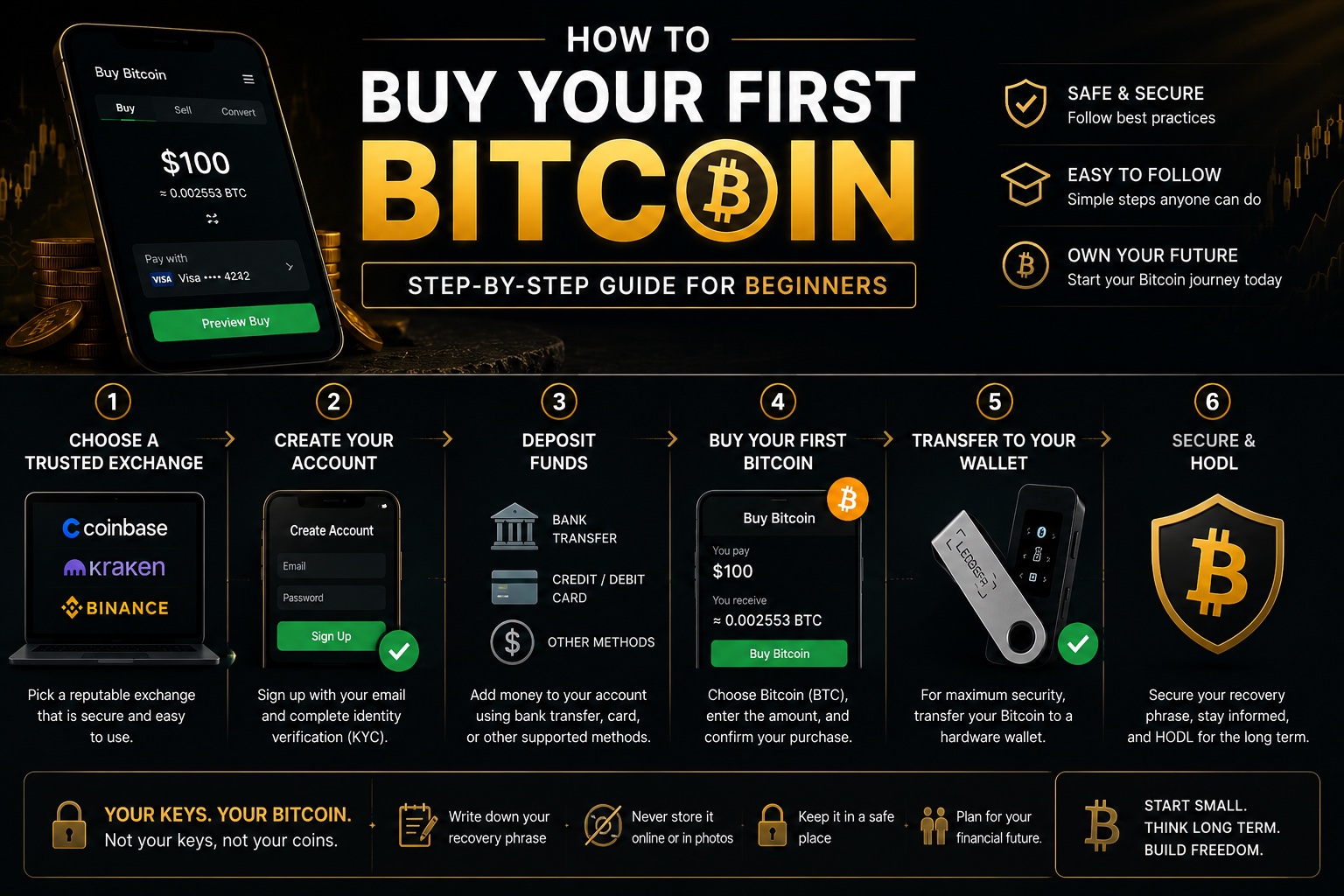
I've been educating newcomers about Bitcoin for years, and I've seen the same questions come up repeatedly. Where do I actually buy it? Is it safe? What happens after I purchase? This guide answers all of those questions and walks you through the entire process from start to finish.
Think of this as having a knowledgeable friend sitting beside you, explaining everything in plain language without the hype or technical jargon that makes crypto seem more complicated than it needs to be.
Understanding What You're Actually Buying
Before you spend any money, let's make sure you understand what Bitcoin actually is. Bitcoin is a digital currency that exists on a decentralized network called a blockchain. Unlike traditional money controlled by banks and governments, Bitcoin operates on a peer-to-peer network maintained by thousands of computers worldwide.
When you buy Bitcoin, you're not receiving a physical coin or even a file on your computer. Instead, you're acquiring ownership of a specific amount of Bitcoin recorded on this global ledger. Your ownership is proven through cryptographic keys—essentially very long, complex passwords that only you control.
Here's something important many beginners don't realize: you don't have to buy a whole Bitcoin. Bitcoin is divisible to eight decimal places. The smallest unit, called a satoshi, is 0.00000001 BTC. This means you can start with as little as $10 or $20 and own a fraction of a Bitcoin.
For example, if Bitcoin is priced at $50,000, a $100 purchase would give you 0.002 BTC, or 200,000 satoshis. Many successful Bitcoin holders started with small, regular purchases rather than large lump sums.
Choosing the Right Exchange for Your First Purchase
A cryptocurrency exchange is a platform where you can buy, sell, and trade Bitcoin using traditional currency like dollars, euros, or pounds. Choosing the right exchange is crucial for beginners because it affects your security, fees, and overall experience.
There are several factors to consider when selecting an exchange:
- Reputation and Security: Look for exchanges with a proven track record, strong security measures, and regulatory compliance in your jurisdiction.
- Ease of Use: Beginner-friendly interfaces make the buying process much less intimidating.
- Payment Methods: Ensure the exchange accepts your preferred payment method, whether that's bank transfer, credit card, or debit card.
- Fees: Compare trading fees, deposit fees, and withdrawal fees across platforms.
- Geographic Availability: Not all exchanges operate in every country.
Binance is one of the world's largest cryptocurrency exchanges by trading volume and offers a comprehensive platform suitable for beginners and experienced traders alike. Their interface includes a simple buy/sell option for newcomers while providing advanced trading features as you grow more comfortable. The exchange supports numerous payment methods and maintains robust security protocols.
Other reputable options include Coinbase, Kraken, and Bitstamp. Each has its strengths, so consider creating accounts on multiple platforms to compare their interfaces and fee structures before making your first purchase.
Step-by-Step: Making Your First Bitcoin Purchase
Now let's walk through the actual process of buying Bitcoin. While specific interfaces vary between exchanges, the fundamental steps remain consistent.
Step 1: Create and Verify Your Account
Visit your chosen exchange and sign up for an account using your email address. You'll need to create a strong, unique password—consider using a password manager to generate and store it securely.
Most reputable exchanges require identity verification to comply with financial regulations. This process, called KYC (Know Your Customer), typically involves:
- Providing your full legal name and address
- Uploading a government-issued ID (passport, driver's license, or national ID card)
- Taking a selfie or completing a video verification
- Verifying your phone number
Verification can take anywhere from a few minutes to several days, depending on the exchange and current demand. Plan ahead if you're hoping to buy during a specific price window.
Step 2: Secure Your Account
Before depositing any money, take time to secure your account properly. Enable two-factor authentication (2FA) using an authenticator app like Google Authenticator or Authy—avoid SMS-based 2FA as it's vulnerable to SIM-swapping attacks.
Many exchanges also offer additional security features like withdrawal address whitelisting, anti-phishing codes, and email notifications for account activity. Enable everything available.
Step 3: Deposit Funds
Once verified, you'll need to add traditional currency to your exchange account. Common methods include:
- Bank Transfer (ACH/SEPA): Usually the lowest fees but can take 1-5 business days
- Wire Transfer: Faster but typically carries higher fees
- Credit/Debit Card: Instant but usually the most expensive option, with fees ranging from 2-5%
For your first purchase, consider starting small—perhaps $50 to $200. This lets you learn the process without significant risk while you're still getting comfortable with the technology.
Step 4: Execute Your Purchase
With funds in your account, navigate to the buy section of your exchange. You'll typically see two options:
Market Order: Buy Bitcoin immediately at the current market price. This is the simplest option for beginners—you specify how much money you want to spend, and the exchange handles the rest.
Limit Order: Set a specific price at which you want to buy. Your order executes only if Bitcoin reaches that price. This requires more market knowledge but can result in better prices.
For your first purchase, a market order is perfectly fine. Enter the amount you wish to spend, review the transaction details including fees, and confirm your purchase. Within seconds, you'll own Bitcoin.
Step 5: Verify Your Holdings
After purchasing, check your exchange wallet balance to confirm the Bitcoin has been credited to your account. You should see both your BTC balance and its approximate value in your local currency.
Congratulations—you're now a Bitcoin holder!
Securing Your Bitcoin: Why Wallets Matter
Here's where many beginners make a critical mistake: leaving their Bitcoin on the exchange indefinitely. While exchanges have improved their security dramatically, they remain attractive targets for hackers. The cryptocurrency community has a saying: "Not your keys, not your coins."
When your Bitcoin sits on an exchange, you don't actually control the private keys—the exchange does. If the exchange gets hacked, goes bankrupt, or freezes your account for any reason, you could lose access to your Bitcoin.
The solution is a personal cryptocurrency wallet. There are several types:
Software Wallets (Hot Wallets)
These are applications installed on your phone or computer. They're convenient for smaller amounts and regular transactions. Popular options include Electrum (desktop), BlueWallet (mobile), and Exodus (both). These wallets are free and give you control of your private keys.
Hardware Wallets (Cold Storage)
For larger amounts or long-term holding, hardware wallets provide the highest security. These are physical devices that store your private keys offline, making them virtually immune to online hacking attempts.
Ledger produces some of the most trusted hardware wallets in the industry. Their devices keep your private keys stored in a secure chip, isolated from internet-connected devices. When you want to send Bitcoin, you physically confirm the transaction on the device itself, adding an extra layer of protection against malware and phishing attacks.
A general rule of thumb: if your Bitcoin holdings represent an amount you'd be devastated to lose, invest in a hardware wallet. The one-time cost of approximately $70-$150 is insignificant insurance for protecting potentially life-changing wealth.
Common Mistakes Beginners Should Avoid
Learning from others' mistakes can save you money, stress, and regret. Here are the most common errors I see new Bitcoin buyers make:
Investing More Than You Can Afford to Lose
Bitcoin's price can be volatile. It's not uncommon to see 20-30% price swings within weeks or even days. Never invest money you need for rent, bills, emergencies, or other essential expenses. Start with an amount that, if it went to zero, wouldn't affect your daily life.
Falling for Scams
The cryptocurrency space unfortunately attracts scammers. Be extremely wary of:
- Anyone promising guaranteed returns or "risk-free" Bitcoin investments
- Unsolicited messages about investment opportunities
- Websites or apps that look like legitimate exchanges but aren't (always verify URLs)
- "Giveaway" scams claiming you'll receive double the Bitcoin you send
- Fake customer support accounts on social media
No legitimate company or individual will ever ask you to send Bitcoin with the promise of sending more back.
Neglecting Security
Using weak passwords, skipping two-factor authentication, or sharing your recovery phrase with anyone puts your Bitcoin at risk. Treat your cryptocurrency security with the same seriousness you'd treat your bank account—arguably more seriously, since Bitcoin transactions cannot be reversed.
Panic Selling
When Bitcoin's price drops significantly, newer holders often panic and sell at a loss. Historically, those who held through downturns (a practice called "HODLing") have been rewarded when prices recovered. Have a plan before you buy and stick to it rather than making emotional decisions.
Overcomplicating Things
You don't need to understand blockchain technology at a technical level to own Bitcoin successfully. You don't need to day-trade or use advanced strategies. Simply buying and securely storing Bitcoin is a perfectly valid approach.
Building a Long-Term Strategy
Once you've made your first purchase and secured your Bitcoin properly, consider how Bitcoin fits into your broader financial picture.
Many Bitcoin holders use a strategy called Dollar-Cost Averaging (DCA). Rather than trying to time the market with a single large purchase, you invest a fixed amount at regular intervals—weekly, bi-weekly, or monthly—regardless of price.
For example, instead of investing $1,200 all at once, you might invest $100 every month for a year. This approach:
- Reduces the impact of volatility on your overall purchase price
- Removes the stress of trying to "time the bottom"
- Creates a disciplined saving habit
- Makes investing accessible even with limited funds
Many exchanges, including Binance, offer automatic recurring purchases to simplify DCA strategies. You can set it and forget it, building your Bitcoin position gradually over time.
Also consider your time horizon. Bitcoin has historically rewarded patient holders while frustrating short-term speculators. If you believe in Bitcoin's long-term potential, temporary price declines become opportunities to acquire more rather than reasons to panic.
What to Do After Your First Purchase
You've bought Bitcoin—now what? Here's a checklist for the days and weeks following your first purchase:
- Secure your recovery phrase: If using a personal wallet, write down your recovery phrase (usually 12 or 24 words) on paper and store it somewhere safe. Never store it digitally or share it with anyone.
- Educate yourself further: Understanding what you own makes you a better holder. Read about Bitcoin's history, technology, and potential use cases.
- Join communities: Respectful Bitcoin communities can provide support, news, and education. Consider forums like Reddit's r/bitcoin or Twitter accounts focused on Bitcoin education.
- Consider your tax obligations: In most jurisdictions, buying Bitcoin isn't a taxable event, but selling it for a profit typically is. Keep records of your purchases including dates, amounts, and prices.
- Review your security regularly: As your holdings grow, periodically review and potentially upgrade your security practices.
Frequently Asked Questions
Is it too late to buy Bitcoin?
This question has been asked at every price point in Bitcoin's history—when it hit $100, $1,000, $10,000, and beyond. While no one can predict future prices, many long-term believers argue that Bitcoin's potential for growth continues given its fixed supply and increasing adoption. The best time to buy was years ago; the second best time might be today.
How much should I invest in Bitcoin as a beginner?
Start with an amount you're completely comfortable losing—perhaps 1-5% of your investable savings. This could be as little as $50 or as much as several thousand dollars depending on your financial situation. You can always increase your position later as you become more knowledgeable and comfortable with the technology.
Can I lose more money than I invest in Bitcoin?
No. Unlike some financial instruments, you cannot lose more than your initial investment when simply buying and holding Bitcoin. The worst-case scenario is that your Bitcoin becomes worthless (which most believers consider extremely unlikely), but you will never owe additional money.
How do I convert my Bitcoin back to regular money?
The process is essentially the reverse of buying. Transfer your Bitcoin to an exchange, sell it for your local currency, and withdraw the funds to your bank account. This process typically takes 1-5 business days depending on the exchange and withdrawal method.
Is Bitcoin legal?
Bitcoin is legal to buy, sell, and hold in most countries including the United States, Canada, United Kingdom, European Union nations, Australia, and many others. However, regulations vary by jurisdiction, and some countries have restricted or banned cryptocurrency. Check your local laws before purchasing.
Conclusion: Your Bitcoin Journey Begins
Buying your first Bitcoin is a significant step, but as you've seen, it's not nearly as complicated as it might have seemed. Choose a reputable exchange, verify your identity, make your purchase, and secure your Bitcoin properly. Those four steps are all that separate you from becoming a Bitcoin holder.
Remember that this is a learning process. You don't need to understand everything perfectly before getting started. Many successful Bitcoin holders began with small purchases while still learning about the technology, gradually increasing their knowledge and holdings over time.
The most important things are to start with money you can afford to lose, prioritize security from day one, and approach this as a long-term journey rather than a get-rich-quick scheme. Bitcoin rewards patience and punishes impulsiveness.
Take your time, do your research, and welcome to the world of Bitcoin.